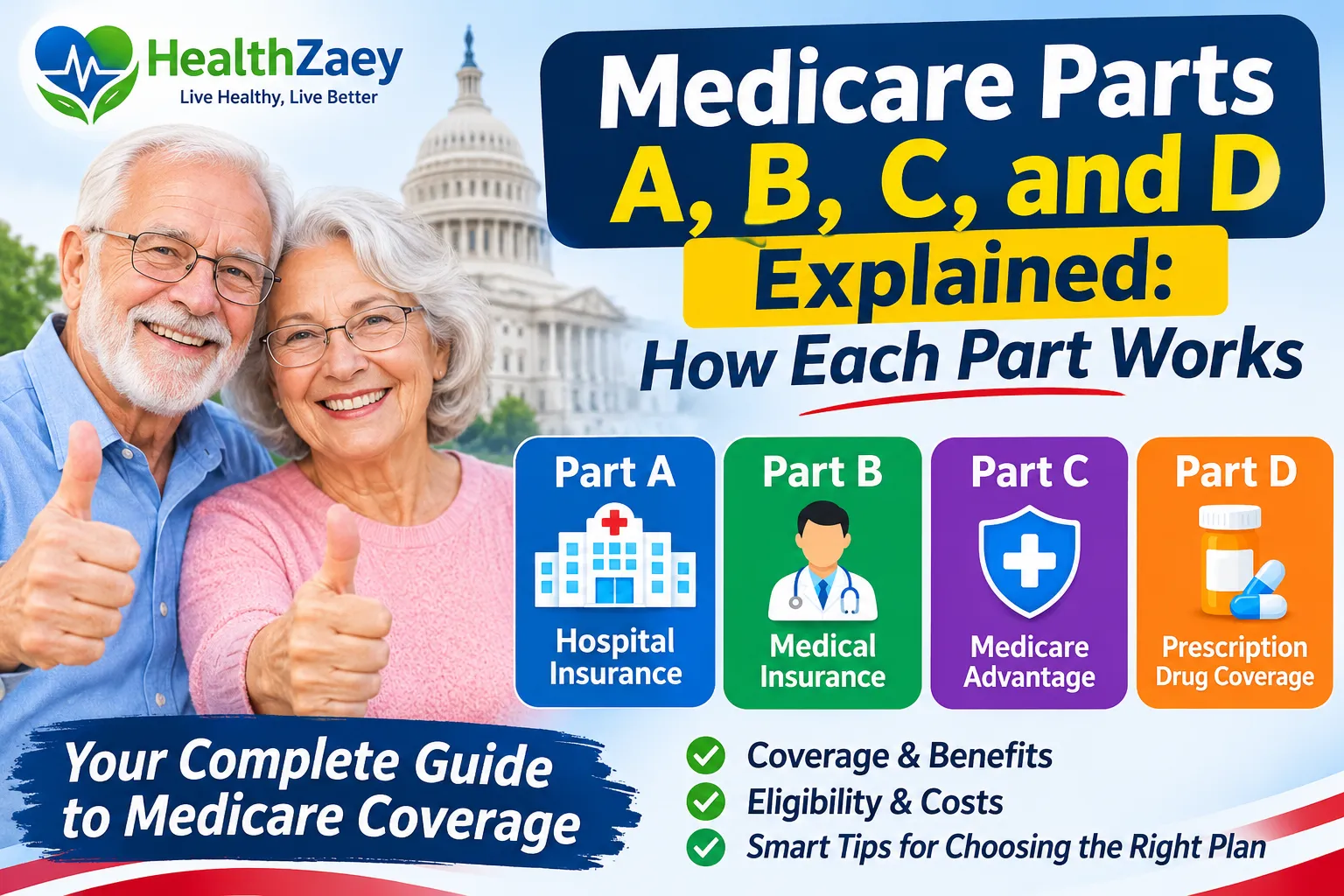
Medicare Parts A, B, C, and D Explained: How Each Part Works
Introduction
Medicare Parts A, B, C, and D each provide different types of healthcare coverage, helping beneficiaries understand their available insurance options. Understanding the different parts of Medicare can make choosing healthcare coverage easier for eligible Americans. Medicare is divided into four main parts: Part A, Part B, Part C, and Part D. Each part serves a different purpose, from hospital care and medical services to prescription drug coverage.
The four parts do not all work in the same way. Original Medicare combines Part A and Part B, while Medicare Advantage (Part C) offers an alternative way to receive Medicare coverage. Prescription drug coverage (Part D) can be obtained through a separate drug plan or included in many Medicare Advantage plans.
This guide explains how Medicare Parts A, B, C, and D work, what each part covers, and how they fit together.
Understanding Medicare Parts A, B, C, and D Coverage
Medicare Parts A, B, C, and D work together to provide different types of healthcare coverage. Medicare Part A covers inpatient hospital care, Part B covers outpatient medical services, Part C offers Medicare Advantage plans through private insurers, and Part D helps cover prescription drug costs. Understanding Medicare Parts A, B, C, and D can help beneficiaries compare their coverage options and make informed healthcare decisions.
What Are the Four Parts of Medicare?
The four parts of Medicare provide different types of healthcare coverage:
- Part A: Helps cover inpatient hospital care and certain related services.
- Part B: Helps cover doctor visits, outpatient care, and preventive services.
- Part C: Medicare Advantage, an alternative way to receive Part A and Part B benefits through private insurance plans.
- Part D: Helps cover prescription medications.
Understanding these differences is important because choosing one coverage option can affect how you receive medical services and pay healthcare expenses. Official Medicare Parts Information
Medicare Part A: Hospital Insurance
Medicare Part A is known as hospital insurance. It helps cover eligible inpatient healthcare services when a person needs hospital-related care.
What Does Part A Cover?
Part A generally helps cover:
- Inpatient hospital stays
- Skilled nursing facility care under qualifying conditions
- Hospice care
- Certain home health care services
For example, if a Medicare beneficiary needs an inpatient hospital stay for a medically necessary treatment, Part A may help cover eligible hospital expenses.
How Does Part A Work?
When you receive covered inpatient care, Medicare Part A helps pay eligible expenses according to Medicare coverage rules. However, beneficiaries may still have deductibles, coinsurance, or other out-of-pocket expenses.
Many people qualify for premium-free Part A because they or their spouse paid Medicare taxes for a sufficient period while working. Others may have to pay a monthly premium.
Part A coverage does not mean every hospital or nursing-related expense is automatically covered. Specific eligibility requirements and coverage conditions apply.
Medicare Part B: Medical Insurance
Medicare Part B provides medical insurance for eligible outpatient and healthcare services. It works alongside Part A as part of Original Medicare.
What Does Part B Cover?
Part B generally covers:
- Doctor visits and medical consultations
- Outpatient hospital services
- Preventive screenings and vaccinations
- Diagnostic tests and laboratory services
- Durable medical equipment
- Certain home health services
- Medically necessary outpatient treatments
For example, if you visit a doctor for a medical consultation or receive an eligible preventive screening, Part B may help cover the service.
How Does Part B Work?
Beneficiaries generally pay a monthly Part B premium. They may also have to meet an annual deductible and pay coinsurance for covered services.
Under Original Medicare, beneficiaries usually pay 20% of the Medicare-approved amount for many Part B services after meeting the deductible, provided the provider accepts Medicare assignment.
Part B is important because it helps cover many healthcare services that do not require an inpatient hospital stay.
Medicare Part C: Medicare Advantage
Medicare Part C is also called Medicare Advantage. It provides an alternative way to receive Medicare Part A and Part B benefits through Medicare-approved private insurance companies.
Unlike Original Medicare, where the federal Medicare program generally pays providers for covered services, Medicare Advantage beneficiaries receive most of their Part A and Part B coverage through their selected private plan.
What Does Medicare Part C Cover?
Medicare Advantage plans must cover medically necessary services included under Original Medicare.
Depending on the plan, additional benefits may include:
- Certain dental services
- Vision care
- Hearing services
- Fitness or wellness benefits
- Prescription drug coverage
Not every plan offers the same benefits. Coverage, costs, provider networks, and plan rules can vary. Medicare Advantage Plans
How Does Part C Work?
To join a Medicare Advantage plan, you generally need both Medicare Part A and Part B.
You select a Medicare-approved plan offered in your service area. The plan then provides your Medicare-covered benefits according to its rules.
Some plans use provider networks, meaning beneficiaries may need to visit participating doctors and hospitals for non-emergency care. Certain services may also require prior authorization or referrals.
Most Medicare Advantage plans include prescription drug coverage, but not all do.
Part C can be a useful option for people who prefer receiving their Medicare benefits through one private health plan.
Medicare Part D: Prescription Drug Coverage
Medicare Part D helps cover the cost of prescription medications. It is available through private insurance companies that follow Medicare rules.
Prescription drug coverage can help beneficiaries manage medication expenses and access covered medicines.
What Does Part D Cover?
Part D plans generally cover:
- Many generic prescription medications
- Many brand-name prescription drugs
- Certain recommended vaccines
- Other medications included in the plan’s drug list
Each plan has its own formulary, which is a list of covered prescription drugs.
Before joining a plan, beneficiaries should check whether their medications are included and whether their preferred pharmacies are in the plan’s network. Medicare Prescription Drug Coverage
How Does Part D Work?
People with Original Medicare can generally add a separate Medicare Part D drug plan.
Alternatively, many Medicare Advantage plans include prescription drug coverage.
Monthly premiums, deductibles, copayments, and coinsurance vary depending on the selected plan and its coverage rules.
Beneficiaries should review their prescription needs and compare available plans before choosing drug coverage.
How Do Medicare Parts A, B, C, and D Work Together?
Although each part has a different purpose, the four parts work within the broader Medicare system.
There are two main ways to receive Medicare health coverage.
Option 1: Original Medicare
Original Medicare includes:
- Part A for hospital insurance
- Part B for medical insurance
Beneficiaries can add a separate Part D prescription drug plan. They may also purchase Medicare Supplement Insurance (Medigap), if eligible, to help with certain out-of-pocket costs.
Under Original Medicare, beneficiaries can generally visit any doctor or hospital that accepts Medicare anywhere in the United States.
Option 2: Medicare Advantage
Medicare Advantage, also called Part C, provides an alternative to Original Medicare.
These plans provide Part A and Part B benefits through Medicare-approved private insurance companies.
Most Medicare Advantage plans also include Part D prescription drug coverage. Some plans offer additional benefits, such as certain dental, vision, and hearing services.
Plan networks, costs, and coverage rules vary, so beneficiaries should compare available options carefully.
Medicare Parts A, B, C, and D: Key Differences
| Medicare Part | Main Purpose | What It Helps Cover |
|---|---|---|
| Part A | Hospital insurance | Inpatient hospital and qualifying related care |
| Part B | Medical insurance | Doctor visits, outpatient care, and preventive services |
| Part C | Medicare Advantage | Part A and Part B benefits through private plans |
| Part D | Drug coverage | Covered prescription medications |
The main difference is that Parts A and B form Original Medicare, Part C provides another way to receive those benefits, and Part D provides prescription drug coverage.
What Should You Consider When Choosing Medicare Coverage?
Before selecting Medicare coverage, consider the following factors:
1. Healthcare Needs
Think about the medical services you regularly use. Someone who frequently visits doctors may have different coverage priorities from someone who mainly needs hospital services.
2. Prescription Medications
If you take prescription medications, compare Part D plans or Medicare Advantage plans that include drug coverage. Check formularies and pharmacy networks.
3. Monthly Premiums and Other Costs
Review monthly premiums, deductibles, copayments, coinsurance, and other possible expenses. The lowest monthly premium does not necessarily mean the lowest overall healthcare cost.
4. Doctors and Hospitals
Check whether your preferred healthcare providers accept Original Medicare or participate in the network of a Medicare Advantage plan you are considering.
5. Additional Benefits
Some Medicare Advantage plans offer additional benefits that may be useful depending on your healthcare needs. Always review the plan’s official coverage details.
Common Mistakes to Avoid When Choosing Medicare Parts
People comparing Medicare options sometimes make decisions without reviewing the full coverage details.
Here are several mistakes to avoid:
- Assuming every Medicare Advantage plan offers identical benefits.
- Believing Original Medicare automatically includes most prescription drug coverage.
- Ignoring provider networks and plan restrictions.
- Choosing a plan based only on its monthly premium.
- Missing applicable enrollment deadlines.
- Failing to check whether current medications are covered.
Reviewing these details can help beneficiaries make more informed healthcare coverage decisions.
Frequently Asked Questions
What are the four parts of Medicare?
The four parts are Part A (hospital insurance), Part B (medical insurance), Part C (Medicare Advantage), and Part D (prescription drug coverage).
Is Medicare Part C the same as Original Medicare?
No. Part C, also called Medicare Advantage, is an alternative way to receive Part A and Part B benefits through a Medicare-approved private insurance plan.
Do I need both Medicare Part A and Part B?
Most people who choose Original Medicare enroll in both. You generally need both Part A and Part B to join a Medicare Advantage plan.
Does Medicare Part D cover all prescription drugs?
No. Each Part D plan has its own formulary and coverage rules. Beneficiaries should check whether their medications are included before choosing a plan.
Can I have Medicare Parts A, B, C, and D at the same time?
You can have Part A and Part B with either Original Medicare or Medicare Advantage. However, Part C is an alternative way to receive your Part A and Part B benefits, not an additional plan that you combine with Original Medicare. Part D drug coverage can be separate or included in many Medicare Advantage plans.
Conclusion
Medicare Parts A, B, C, and D serve different purposes within the U.S. healthcare system. Part A helps cover inpatient hospital care, Part B covers many outpatient medical services, Part C offers an alternative through Medicare Advantage plans, and Part D helps pay for covered prescription medications.
Understanding how these parts work together can help beneficiaries compare healthcare coverage options and avoid common enrollment mistakes. Understanding Medicare Parts A, B, C, and D is an important step in choosing suitable healthcare coverage. Each part offers different benefits, from hospital and medical services to Medicare Advantage plans and prescription drug coverage. By comparing these options, beneficiaries can make more informed decisions about their healthcare needs and costs.
Before choosing a plan, review your medical needs, prescription medications, preferred healthcare providers, and expected costs. For accurate and current information, use official Medicare resources and compare the plans available in your area.
Related Guide: Read our complete guide to [Medicare coverage, eligibility, costs, and benefits] to learn more about the Medicare program.