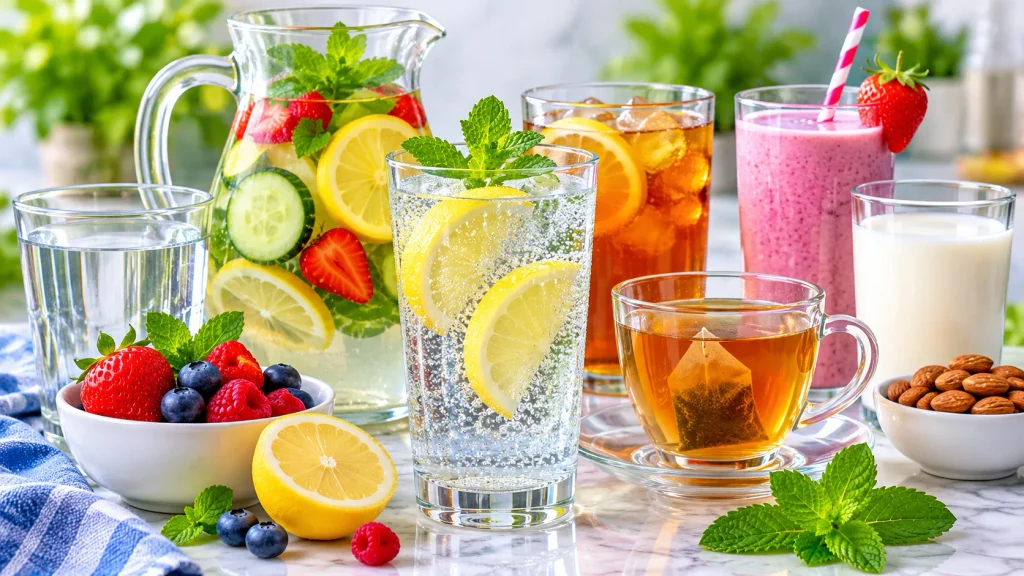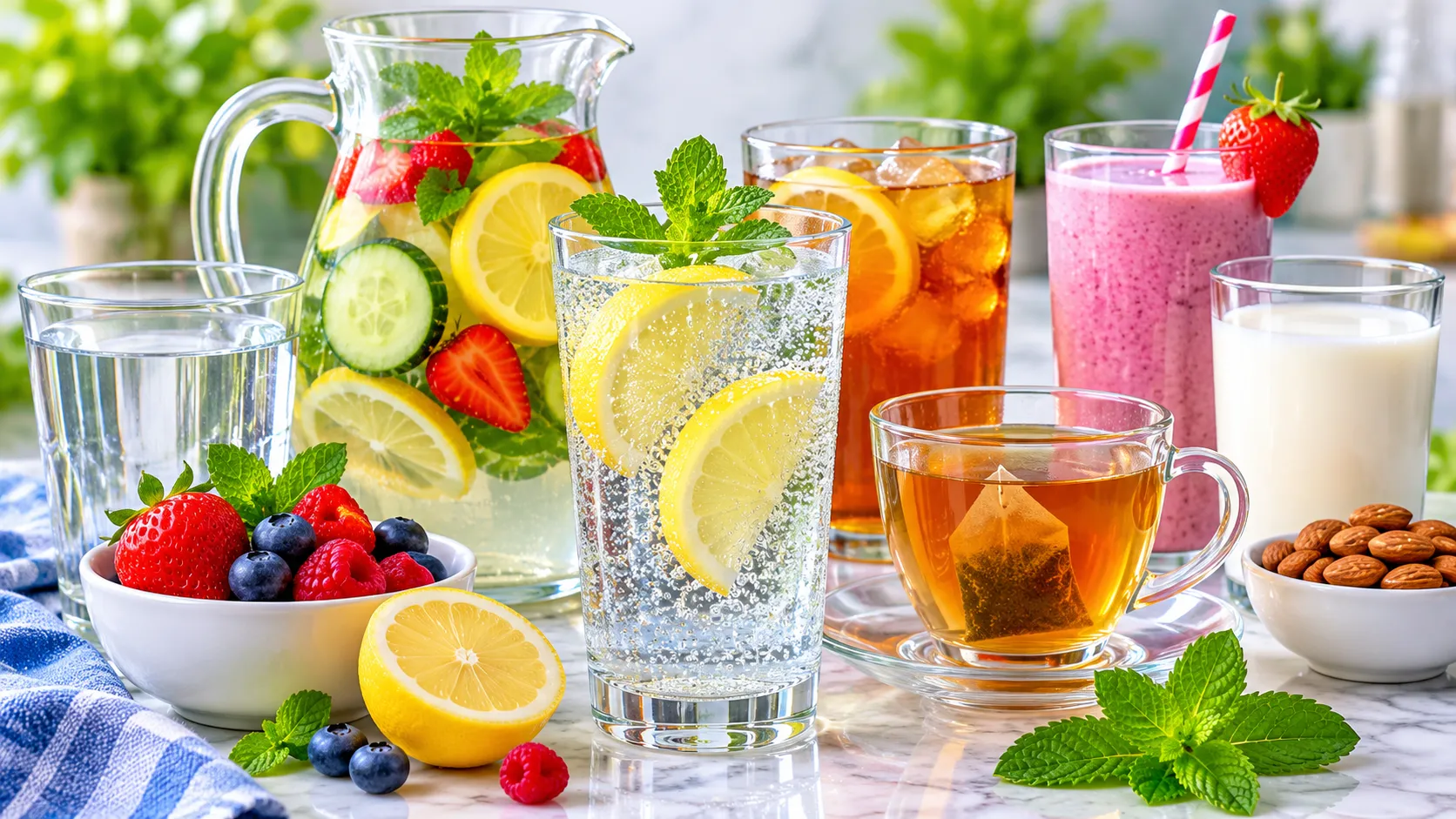
Soft drinks can be refreshing, but drinking sugar-sweetened beverages regularly can add a substantial amount of sugar and calories to your diet. If you want to cut back, you do not have to give up enjoyable drinks. There are several refreshing alternatives that can help you reduce added sugar while still giving you plenty of flavour and variety.
Some options are as simple as chilled water with fresh fruit. Others include sparkling water, unsweetened tea, plain milk, and homemade smoothies without added sugar.
In this guide, you will discover 10 healthy alternatives to soft drinks, how they compare, which drinks may contain hidden sugars, and practical ways to make the switch.
Why Consider Replacing Sugary Soft Drinks?
Regular soft drinks often contain large amounts of added sugar but provide little nutritional value. According to the US Centers for Disease Control and Prevention (CDC), a typical 12-ounce serving of regular soda contains more than 10 teaspoons (about 42 grams) of added sugar and approximately 150 calories from sugar. Actual amounts vary by brand and serving size.
Frequent consumption of sugar-sweetened beverages is associated with health concerns such as weight gain, obesity, type 2 diabetes, heart disease, and tooth decay.
Replacing some sugary drinks with water or other unsweetened options can help reduce your added sugar intake. The best choice depends on your taste, dietary needs, and health circumstances.
10 Healthy Alternatives to Soft Drinks
Here are 10 practical drink options to consider when you want something other than a sugary soft drink.
1. Plain Water
Plain water is one of the simplest alternatives to soft drinks. It provides hydration without added sugar, calories, or artificial sweeteners.
You can drink tap water, filtered water, or bottled water, depending on what is safe and available where you live.
How to make it more enjoyable:
- Keep chilled water in the refrigerator.
- Carry a reusable water bottle.
- Add fresh lemon, lime, cucumber, or mint for natural flavour.
- Try drinking a glass of water when you usually reach for soda.
Water needs vary between individuals and can be affected by climate, physical activity, age, and health conditions.
2. Sparkling Water
If you enjoy the fizz of carbonated soft drinks, plain sparkling water may be a satisfying alternative. It contains carbonation but does not need added sugar or calories.
Choose plain sparkling water or check the label carefully when buying flavoured varieties. Some products contain added sugars, syrups, or sweeteners.
A simple idea: Add a slice of lemon, lime, or orange to plain sparkling water for extra flavour.
Sparkling water is not the same as tonic water, which may contain added sugar.
3. Fruit-Infused Water
Fruit-infused water adds a mild natural flavour to ordinary water. It is easy to prepare at home and can make drinking water more appealing.
Try combinations such as:
- Lemon and cucumber
- Strawberry and mint
- Orange and basil
- Lime and fresh ginger
- Blueberry and lemon
Add sliced fruit and herbs to a jug of water, refrigerate for a few hours, and serve chilled.
Fruit-infused water generally contains very little sugar when the fruit is used only for flavouring and is not blended or juiced into the drink. Wash fresh produce before use and refrigerate it safely.
4. Unsweetened Iced Tea
Unsweetened iced tea can be a refreshing alternative if you enjoy flavoured drinks. Black, green, and some other teas can be prepared at home without adding sugar.
How to prepare it:
- Brew your preferred tea.
- Allow it to cool.
- Refrigerate until chilled.
- Add lemon or mint if desired.
- Serve over ice.
Tea naturally contains plant compounds, but its caffeine content varies by type and preparation. If you are sensitive to caffeine, choose decaffeinated tea or an appropriate caffeine-free option.
Avoid bottled iced teas that contain added sugar.
5. Unsweetened Herbal Tea
Herbal teas offer variety without needing added sugar. Depending on the ingredients, they can have floral, fruity, minty, or spicy flavours.
Popular choices include:
- Peppermint tea
- Ginger tea
- Chamomile tea
- Hibiscus tea
- Rooibos tea
Many herbal teas are naturally caffeine-free, but not all herbal products are suitable for everyone. Some herbs can interact with medicines or may not be recommended during pregnancy or for certain medical conditions. Check the ingredients and seek professional advice if you are unsure.
You can enjoy herbal tea warm or refrigerate it for a chilled drink.
6. Unsweetened Coffee
Plain coffee, served hot or cold, can be an alternative to sweetened soft drinks for adults who enjoy its taste.
Try:
- Black coffee
- Unsweetened iced coffee
- Cold brew without added syrup
- Coffee with a small amount of plain milk, if desired
Flavoured syrups, sweetened creamers, whipped toppings, and ready-made coffee drinks can add significant amounts of sugar and calories.
Caffeine affects people differently. The US Food and Drug Administration (FDA) notes that up to 400 milligrams of caffeine per day is not generally associated with dangerous effects for most healthy adults, but individual tolerance varies. Pregnant people, people with certain medical conditions, and those taking particular medicines may need different limits.
7. Plain Milk
Plain milk can be a useful alternative when you want a drink that provides nutrients rather than simply replacing soda’s sweetness.
Depending on the type, milk provides protein, calcium, and other nutrients. It also contains naturally occurring lactose, a milk sugar. This is different from added sugar.
Choose plain, unsweetened milk rather than flavoured milk drinks, which may contain added sugars.
People with lactose intolerance may prefer lactose-free milk or another suitable alternative. Anyone with a milk allergy should avoid dairy milk.
Milk provides nutrients and calories, so it should not be treated as a direct replacement for water throughout the day.
8. Unsweetened Fortified Plant-Based Milk
Unsweetened plant-based drinks may be suitable alternatives for people who avoid dairy or prefer plant-based options.
Common varieties include:
- Soy milk
- Almond milk
- Oat milk
- Pea-protein milk
Nutritional content differs considerably between brands and ingredients. Some products provide protein, while others contain very little. Fortified versions may provide calcium, vitamin D, vitamin B12, or other nutrients.
Look for products labelled unsweetened and check the nutrition information. Compare protein, added sugars, and fortification rather than assuming every plant-based drink offers the same nutritional benefits.
9. Sparkling Water With a Splash of 100% Fruit Juice
If you miss the sweet and fizzy taste of soft drinks, try mixing plain sparkling water with a small splash of 100% fruit juice.
For example:
- Orange juice with sparkling water
- Cranberry juice with sparkling water
- Pomegranate juice with sparkling water
- Lemon juice with sparkling water
This can provide flavour while using less juice than a full glass.
However, 100% fruit juice is not sugar-free. Even without added sugar, fruit juice contains free sugars, which the World Health Organization (WHO) recommends limiting. Whole fruit is generally a better way to obtain fruit’s fibre.
Keep the juice portion modest and avoid adding extra sugar or syrup.
10. Homemade Fruit Smoothies Without Added Sugar
A homemade smoothie can be a more filling option than a soft drink, particularly when it contains whole fruit and other nutritious ingredients.
A simple smoothie might include:
- One small banana
- A handful of berries
- Plain unsweetened yogurt or an appropriate milk alternative
- A little water or ice
Blend until smooth. You can adjust the consistency without adding sugar, honey, or syrup.
Smoothies still contain natural sugars and calories. Blending fruit does not make those sugars disappear, and large portions can add up. Use moderate portions and consider eating whole fruit regularly as well.
Comparing These Alternatives at a Glance
The following table provides a general comparison. Actual nutrition depends on ingredients, preparation, portion size, and brand.
| Drink | Added sugar when prepared plain | Calories | Main consideration |
|---|---|---|---|
| Plain water | None | None | Simple everyday hydration |
| Plain sparkling water | None | None | Check flavoured varieties |
| Fruit-infused water | Usually none | Very low | Avoid adding juice or sugar |
| Unsweetened iced tea | None | Very low | Caffeine may be present |
| Unsweetened herbal tea | None | Very low | Check herbal ingredients |
| Unsweetened coffee | None | Very low | Contains caffeine unless decaffeinated |
| Plain milk | None | Varies | Contains natural lactose and nutrients |
| Unsweetened fortified plant milk | None if truly unsweetened | Varies | Check protein and fortification |
| Sparkling water with fruit juice | Depends on juice and recipe | Varies | Juice contains free sugars |
| Homemade fruit smoothie | None if no sweetener is added | Varies | Natural sugars and calories remain |
Important: “No added sugar” does not mean “sugar-free.” Milk contains natural lactose, while fruit juice and smoothies contain naturally occurring sugars. Always consider the full nutritional content and serving size.
Drinks That May Seem Healthy but Contain Added Sugar
Some drinks are marketed as healthy, natural, or energising, but they may still contain substantial amounts of sugar.
Before choosing a drink, check its ingredients and nutrition information.
Flavoured Water
Some flavoured waters contain added sugar, syrups, or sweeteners. Choose plain water or a clearly labelled unsweetened variety if your goal is to reduce added sugar.
Bottled Iced Tea
Ready-to-drink iced tea can contain added sugar even when it is marketed as a tea-based beverage. Compare brands and choose unsweetened versions where available.
Energy Drinks
Energy drinks may contain added sugar and high amounts of caffeine or other stimulants. They are not necessary for everyday hydration. Children and teenagers should avoid energy drinks.
Sports Drinks
Sports drinks are designed for particular situations involving prolonged or intense physical activity. For ordinary daily activities, water is generally sufficient for hydration. Many sports drinks contain added sugars.
Sweetened Plant-Based Drinks
Some almond, oat, soy, and other plant-based drinks contain added sugar or flavoured syrups. Choose unsweetened versions and compare their nutritional content.
Fruit Drinks and Juice Cocktails
A fruit-flavoured drink is not necessarily 100% fruit juice. Some products contain added sugar, concentrates, or only a small amount of fruit juice. Read the ingredient list carefully.
How to Read Drink Labels and Spot Hidden Sugar
Checking the label is one of the most practical ways to compare packaged drinks.
Here are a few things to look for:
1. Check added sugars
Where the label provides an added-sugars value, compare it between products. A drink with less added sugar may be a better choice if you are trying to reduce your intake.
2. Check total sugars
Total sugars can include naturally occurring sugars as well as added sugars. For example, plain milk contains natural lactose. This is why total sugar and added sugar are not interchangeable.
3. Read the ingredient list
Look for ingredients such as sugar, glucose syrup, fructose syrup, sucrose, dextrose, honey, and fruit juice concentrate. Ingredient names and labelling rules can differ by country.
4. Check the serving size
A bottle may contain more than one serving. If you drink the entire bottle, you may consume more sugar and calories than the per-serving figures suggest.
5. Do not rely only on front-of-pack claims
Words such as “natural,” “vitamin-enriched,” or “made with fruit” do not automatically mean a drink is low in sugar.
A note for international readers: Nutrition label formats vary between countries. Some labels list added sugars separately, while others may show only total sugars. If your local label does not list added sugars, check the ingredients list and compare total sugar content and serving size. Use your country’s official food-labelling guidance where available.
Simple Tips to Cut Back on Soft Drinks
Changing your drink habits does not have to happen all at once. Small, realistic changes may be easier to maintain.
- Start gradually: Replace one sugary soft drink a day with water or an unsweetened alternative.
- Keep water nearby: A refillable bottle can make water more convenient.
- Experiment with flavours: Try lemon, mint, cucumber, berries, or sparkling water.
- Reduce sweetness gradually: If you usually add sugar to tea or coffee, try using a little less over time.
- Plan ahead: Keep chilled water or unsweetened drinks available at home and work.
- Check labels: Compare sugar content before buying bottled drinks.
- Choose drinks that fit your routine: Unsweetened tea, plain water, or sparkling water may work well in different situations.
If you drink soft drinks frequently, focus on progress rather than trying to change every habit overnight.
Frequently Asked Questions
1. What is the healthiest alternative to soft drinks?
Plain water is generally the simplest choice because it hydrates without added sugar or calories. Unsweetened sparkling water, tea, and other unsweetened drinks can also be suitable options.
2. Is sparkling water healthier than soda?
Plain sparkling water is generally a better choice if you want carbonation without added sugar. Regular soda typically contains added sugar and calories, while plain sparkling water does not. Check flavoured sparkling-water labels because some products contain sweeteners or sugar.
3. What can I drink instead of soda every day?
You can choose plain water, sparkling water, fruit-infused water, unsweetened tea, or other drinks that suit your dietary needs. Plain water is a practical everyday option.
4. Is 100% fruit juice a healthy replacement for soft drinks?
100% fruit juice can provide some vitamins and minerals, but it also contains free sugars, even when no sugar has been added. It is best consumed in limited amounts. Whole fruit is generally a better choice because it contains fibre.
5. Are diet or sugar-free soft drinks healthy?
Sugar-free drinks may contain fewer or no calories from sugar, but that does not automatically make them the best everyday choice. The WHO advises against relying on non-sugar sweeteners as a long-term strategy for weight control. Water and unsweetened drinks are useful alternatives.
6. Can I drink unsweetened tea instead of soda?
Yes. Unsweetened tea can be a refreshing alternative to sugary soda. Some teas contain caffeine, so consider your caffeine intake and personal sensitivity.
7. Are homemade smoothies better than soft drinks?
A homemade smoothie made with whole fruit and no added sugar can provide nutrients that a typical soft drink does not. However, smoothies still contain natural sugars and calories. Keep portions reasonable and do not assume that every smoothie is automatically healthy.
8. How can I stop craving soft drinks?
Try replacing one serving at a time, keeping cold water available, experimenting with sparkling water, and gradually reducing how sweet your drinks are. It may take time to adjust to less-sweet flavours, so choose a realistic approach.
Final Thoughts
Finding healthy alternatives to soft drinks does not mean giving up flavour or enjoyment. Plain water, sparkling water, fruit-infused water, unsweetened tea, and other options can help you reduce added sugar while keeping your drink choices varied.
Start with one change that feels manageable. Check labels, watch serving sizes, and remember that drinks described as natural or fruit-based can still contain significant amounts of sugar.
Over time, choosing unsweetened drinks more often can become a practical part of a balanced eating pattern.
Medical Disclaimer
This article is for general educational purposes only and is not a substitute for professional medical advice, diagnosis, or treatment. Individual fluid and dietary needs can vary depending on age, health conditions, pregnancy, medications, and activity level. Speak with a qualified healthcare professional or registered dietitian if you need personalised guidance.
References
- Centers for Disease Control and Prevention (CDC). Rethink Your Drink.
- Centers for Disease Control and Prevention (CDC). About Water and Healthier Drinks.
- World Health Organization (WHO). Healthy Diet.
- U.S. Food and Drug Administration (FDA). Added Sugars on the Nutrition Facts Label.
- U.S. Food and Drug Administration (FDA). Spilling the Beans: How Much Caffeine is Too Much?.