
4
Introduction
The United States healthcare system includes several government programs designed to help citizens access affordable medical care. Two of the most important programs are Medicare and Medicaid.
Although these programs have similar names, they serve different populations, follow different eligibility rules, and provide different types of healthcare coverage.
Understanding the differences between Medicare and Medicaid is essential for seniors, low-income families, caregivers, and individuals planning for healthcare costs in retirement. This comprehensive guide explains the eligibility requirements, coverage options, benefits, costs, and key differences between Medicare and Medicaid.
What is Medicare?
Medicare is a federal health insurance program primarily designed for people aged 65 and older. It also covers certain younger individuals with disabilities and those with serious medical conditions.
The program was established during the Social Security Amendments of 1965, which expanded healthcare access for millions of Americans.
Medicare is managed by the Centers for Medicare & Medicaid Services, a federal agency responsible for overseeing national healthcare programs.
Who Qualifies for Medicare?
You may qualify for Medicare if you:
- Are 65 years or older
- Are under 65 with a qualifying disability
- Have End-Stage Renal Disease
- Have Amyotrophic Lateral Sclerosis
Most people become eligible for Medicare after paying payroll taxes through their employment for at least 10 years (40 quarters).
Parts of Medicare
Medicare is divided into four main parts that cover different healthcare services.
Medicare Part A – Hospital Insurance
Medicare Part A covers inpatient hospital services such as:
- Hospital stays
- Skilled nursing facility care
- Hospice care
- Limited home healthcare services
Most people receive Part A without paying a monthly premium because they paid Medicare taxes during their working years.
Medicare Part B – Medical Insurance
Medicare Part B covers outpatient services, including:
- Doctor visits
- Preventive healthcare services
- Diagnostic tests
- Durable medical equipment
Part B typically requires a monthly premium, which may vary depending on income.
Medicare Part C – Medicare Advantage
Medicare Advantage plans are offered by private insurance companies approved by Medicare.
These plans often include:
- Hospital coverage
- Doctor visits
- Prescription drug coverage
- Dental and vision services
Many people choose Medicare Advantage plans because they combine multiple services into one plan.
Medicare Part D – Prescription Drug Coverage
Medicare Part D helps cover the cost of prescription medications. These plans are offered by private insurance companies and help reduce out-of-pocket drug expenses.

What is Medicaid?
Medicaid is a government health insurance program designed for low-income individuals and families. Unlike Medicare, Medicaid is funded by both federal and state governments.
Each U.S. state administers its own Medicaid program, meaning coverage, benefits, and eligibility requirements may vary depending on the state.
Medicaid plays a critical role in providing healthcare to millions of Americans who might otherwise be unable to afford medical services.
Who Qualifies for Medicaid?
Eligibility for Medicaid is mainly based on income level and financial need.
Common groups that qualify include:
- Low-income adults
- Children
- Pregnant women
- Seniors with limited income
- People with disabilities
Eligibility is often determined using the Affordable Care Act, which expanded Medicaid coverage in many states.
What Services Does Medicaid Cover?
Medicaid covers a wide range of healthcare services, including:
Primary Healthcare Services
- Doctor visits
- Preventive care
- Hospital services
- Laboratory tests
Maternal and Child Healthcare
- Prenatal care
- Child wellness visits
- Vaccinations
Long-Term Care Services
Medicaid is one of the largest providers of long-term care coverage in the United States. It helps pay for:
- Nursing home care
- Long-term rehabilitation
- Personal care services
Key Differences Between Medicare and Medicaid
Although both programs provide health coverage, they differ in several important ways.
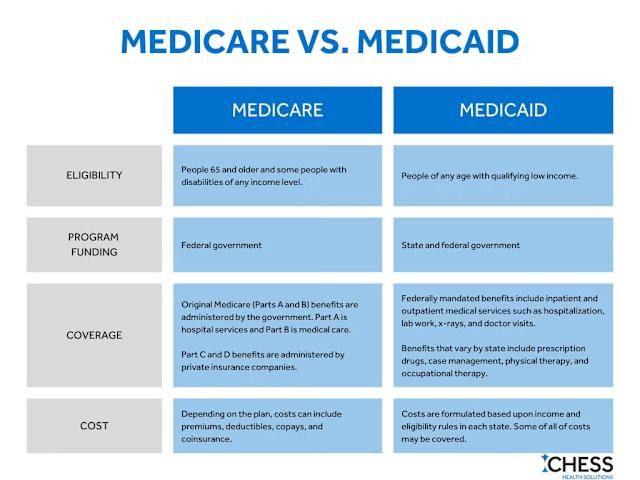
| Feature | Medicare | Medicaid |
| Primary purpose | Healthcare for seniors and disabled individuals | Healthcare for low-income individuals |
| Age requirement | Mostly 65+ | Any age |
| Eligibility criteria | Age or disability | Income and financial need |
| Program administration | Federal government | Federal and state governments |
| Cost | May require premiums and deductibles | Often free or very low cost |
| Coverage scope | Limited long-term care | Extensive long-term care services |
Costs Associated with Medicare
Although Medicare provides valuable healthcare coverage, it is not completely free.
Common Medicare costs include:
- Monthly premiums
- Deductibles
- Copayments
- Coinsurance
For example, Medicare Part B typically requires a monthly premium payment. In addition, beneficiaries may need to pay deductibles before insurance coverage begins.
Costs Associated with Medicaid
In most cases, Medicaid beneficiaries pay little or nothing for healthcare services.
Possible costs may include:
- Small copayments
- Minimal service fees
However, these costs are generally significantly lower than private insurance plans.
Can Someone Have Both Medicare and Medicaid?
Yes, some individuals qualify for both programs. These people are known as dual eligible beneficiaries.
Dual eligibility usually occurs when:
- A person is 65 or older and qualifies for Medicare
- Their income is low enough to qualify for Medicaid
In these situations:
- Medicare acts as the primary insurance provider
- Medicaid covers additional healthcare costs
Medicaid may help pay for:
- Medicare premiums
- Deductibles
- Long-term care services
This combination significantly reduces healthcare expenses for eligible individuals.
Benefits of Medicare
Medicare provides several advantages for eligible individuals.
Reliable Healthcare Coverage
Medicare ensures that seniors and disabled individuals have access to essential healthcare services.
Preventive Healthcare
Medicare covers many preventive services, including screenings and wellness visits.
Nationwide Availability
Unlike Medicaid, Medicare benefits are generally consistent across all states.
Benefits of Medicaid
Medicaid provides critical healthcare support for vulnerable populations.
Affordable Medical Care
Medicaid ensures that low-income individuals receive healthcare services without facing overwhelming costs.
Comprehensive Coverage
Many Medicaid programs include services that private insurance plans often exclude.
Long-Term Care Support
Medicaid covers a large portion of long-term care services in the United States.
Medicare vs Medicaid: Which One is Better?
The answer depends on individual circumstances.
Medicare may be the better option if:
- You are 65 years or older
- You have a qualifying disability
- You need reliable healthcare coverage during retirement
Medicaid may be the better option if:
- Your income is limited
- You need low-cost healthcare services
- You require long-term care assistance
Some individuals benefit from both programs simultaneously, which provides the most comprehensive healthcare coverage.
How to Apply for Medicare
You can apply for Medicare through the Social Security Administration.
Application methods include:
- Online application through the Social Security website
- Visiting a local Social Security office
- Calling Social Security directly
Most people automatically enroll in Medicare when they begin receiving Social Security benefits.
How to Apply for Medicaid
Medicaid applications are typically handled at the state level.
You can apply through:
- Your state’s Medicaid website
- Healthcare marketplaces
- Local healthcare assistance offices
Eligibility is determined based on income, household size, and state-specific requirements.
Common Misconceptions About Medicare and Medicaid
Several misconceptions exist regarding these healthcare programs.
Misconception 1: Medicare Is Only for Seniors
While Medicare primarily serves seniors, it also covers younger individuals with disabilities.
Misconception 2: Medicaid Is Only for Unemployed Individuals
Many Medicaid recipients are working individuals with low income.
Misconception 3: Medicare Covers All Healthcare Costs
Medicare beneficiaries often still pay deductibles and copayments.
Conclusion
Understanding the differences between Medicare and Medicaid is essential for navigating the U.S. healthcare system.
- Medicare provides health insurance mainly for seniors and individuals with disabilities.
- Medicaid offers healthcare coverage for low-income individuals and families.
Both programs play a vital role in ensuring that millions of Americans have access to necessary medical services. By understanding eligibility requirements, coverage options, and costs, individuals can make better healthcare decisions and choose the program that best fits their needs.
