
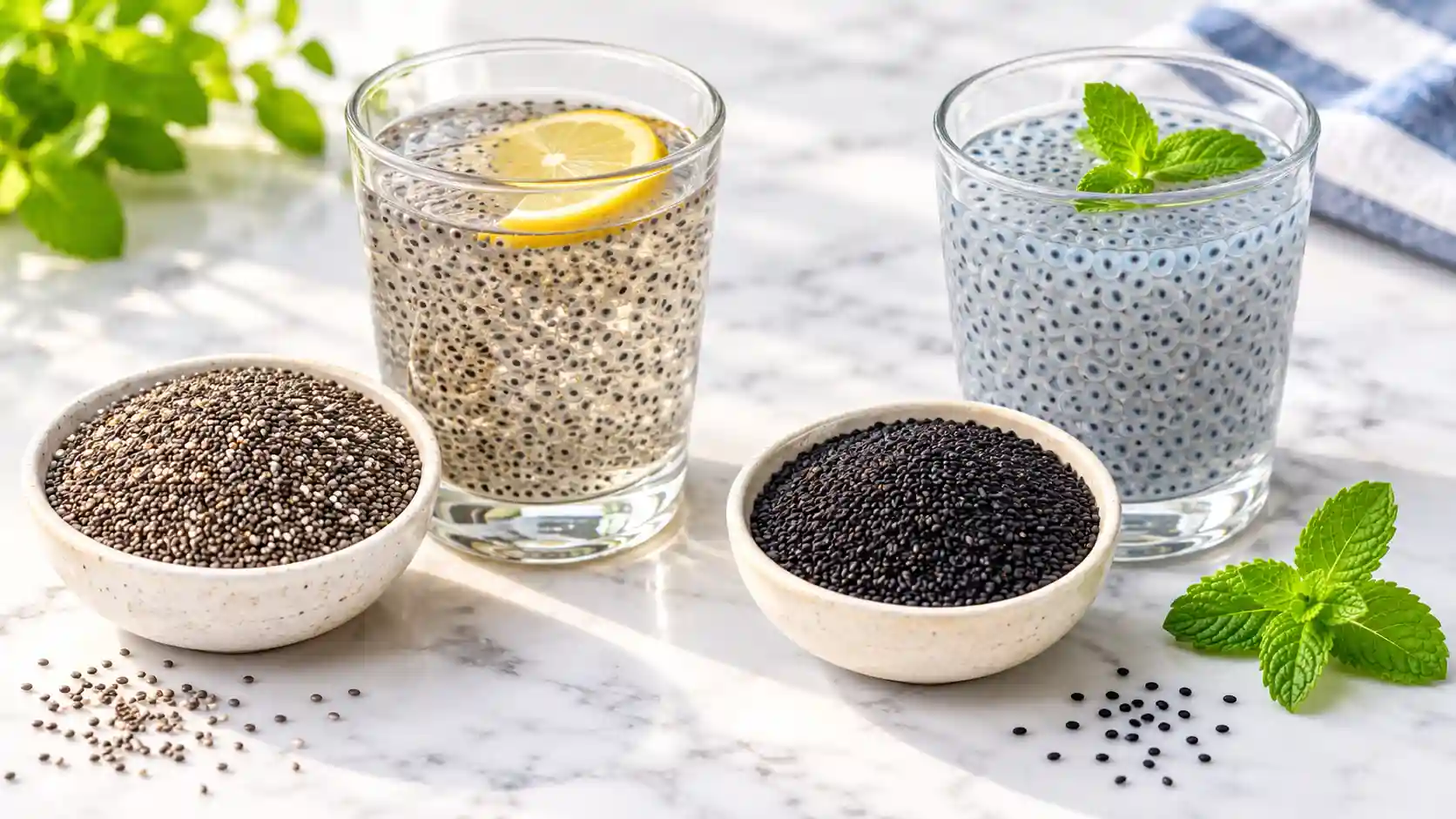
Quick Answer: Both chia seeds and basil seeds (sabja) are nutrient-dense seeds that absorb water to form a soothing gel that supports digestion and hydration. Chia seeds contain significantly more omega-3 fatty acids and calcium, making them ideal for heart and bone support, while basil seeds expand faster (in 5–10 minutes), offer higher iron content, and are traditionally used in refreshing drinks.
When soaked in liquid, chia seeds and basil seeds look remarkably similar—each develops a translucent, gelatinous coating that adds texture to beverages and snacks. Because of this resemblance, many people confuse the two or wonder which option fits their daily routine better.
Although both seeds offer valuable dietary fiber and plant-based minerals, they come from different plants, require different preparation steps, and provide distinct nutritional strengths. Understanding how they compare helps you choose the right seed for your meals and hydration habits.
Chia Seeds vs. Basil Seeds: Side-by-Side Comparison
Before diving into individual nutrients, here is a quick overview of how chia seeds and basil seeds differ in appearance, preparation, and nutritional profile:
| Feature | Chia Seeds (Salvia hispanica) | Basil Seeds / Sabja (Ocimum basilicum) |
|---|---|---|
| Plant Origin | Native to Central and South America (mint family) | Native to India and Southeast Asia (sweet basil plant) |
| Visual Appearance | Oval, speckled gray, black, or white | Small, solid jet-black, tear-shaped |
| Soaking Time | 20–30 minutes (or overnight) | 5–10 minutes (swells very rapidly) |
| Dietary Fiber | ~10g per ounce (28g) | ~7g per tablespoon (13g) |
| Omega-3 Fats (ALA) | Very high (~5,000 mg per ounce) | Moderate (~1,200 mg per tablespoon) |
| Standout Minerals | Calcium, Phosphorus, Manganese | Iron, Potassium, Magnesium |
| Can Be Eaten Dry? | Yes (in small amounts with plenty of water) | No (must always be fully soaked first) |
| Best Culinary Uses | Overnight oats, chia pudding, smoothies, baking | Lemonade, rose milk, summer coolers, fruit bowls |
What Are the Main Nutritional Differences?
Both chia and basil seeds deliver concentrated nutrition in small serving sizes, yet each excels in specific nutrients.
1. Omega-3 Fatty Acids and Healthy Fats
Chia seeds are one of the richest plant-based sources of alpha-linolenic acid (ALA), an essential omega-3 fatty acid that supports cardiovascular health and helps manage everyday inflammation. According to the National Institutes of Health (NIH), a single 1-ounce (28-gram) serving of chia seeds provides roughly 5 grams of ALA.
Basil seeds also contain beneficial ALA omega-3 fats, though in smaller amounts—typically around 1.2 grams per tablespoon (13 grams). If increasing plant-based omega-3 intake is your primary goal, chia seeds hold a clear advantage.
2. Dietary Fiber and Satiety
Both seeds are packed with soluble fiber, the type of fiber that absorbs water and slows down digestion. As highlighted by the Harvard T.H. Chan School of Public Health, soluble fiber helps slow gastric emptying and promotes steady digestion.
- Chia seeds provide roughly 10 grams of fiber per 2 tablespoons (28 grams)—nearly one-third of the recommended daily intake for adults.
- Basil seeds deliver about 7 grams of fiber in just 1 tablespoon (13 grams), making them slightly denser in fiber per gram.
Because soluble fiber expands in the stomach, both seeds help promote a natural feeling of fullness after meals.
3. Essential Minerals (Calcium vs. Iron)
Data from USDA FoodData Central shows that their mineral profiles complement different dietary needs:
- Chia seeds lead in calcium: Two tablespoons of chia seeds contain around 179 mg of calcium—roughly 14% of the Daily Value—supporting bone and teeth health, especially for people who avoid dairy.
- Basil seeds lead in iron: One tablespoon of basil seeds provides approximately 2.2 mg of iron, making them a helpful plant-based addition for supporting healthy oxygen transport and energy levels.
Practical Health Benefits: How Each Seed Supports Your Body
Digestive Regularity and Gut Support
When soaked, both chia and basil seeds release mucilage, a soluble fiber gel that adds bulk and moisture to stool. Including moderate amounts of chia seeds in water or soaked basil seeds alongside adequate daily fluid intake can help support smooth bowel movements and nourish beneficial gut bacteria.
Hydration and Refreshment
In South Asian and Mediterranean traditions, soaked basil seeds (commonly known as sabja or tukmaria) are widely added to chilled water, lime juice, and herbal beverages during hot weather. Because they absorb water rapidly and hold moisture in the digestive tract, they make a refreshing addition to daily hydration routines alongside balanced fluids like electrolyte water or plain water.
Post-Meal Blood Sugar Balance
The soluble fiber gel formed by both chia and basil seeds slows the rate at which digestive enzymes break down carbohydrates into glucose. Adding a spoonful of soaked seeds to carbohydrate-rich meals—such as oatmeal, yogurt bowls, or smoothies—may help support steadier post-meal blood sugar levels as part of an overall balanced diet.
How to Soak and Use Chia vs. Basil Seeds Safely
Preparing each seed properly improves both texture and digestibility.
Soaking Ratio and Timing
- How to soak chia seeds: Mix 1 tablespoon of chia seeds with 3 to 4 tablespoons of water (or milk). Stir well to prevent clumping and let sit for 20 to 30 minutes (or refrigerate overnight) until a thick pudding-like gel forms.
- How to soak basil seeds: Mix 1 tablespoon of basil seeds into 1 cup (240 ml) of warm or room-temperature water. Stir gently; the seeds will swell to several times their size within 5 to 10 minutes. Strain excess water if needed before adding to drinks.
Important Safety Precautions
While both seeds are safe for most healthy adults, following basic precautions helps prevent discomfort:
- Always pre-soak basil seeds: Dry basil seeds are hard and difficult to chew. Never swallow dry basil or chia seeds followed by water, as they absorb liquid rapidly and can pose a choking or esophageal blockage risk.
- Start with a small serving: If you are not used to high-fiber foods, begin with 1 teaspoon per day and gradually increase to 1 tablespoon to minimize temporary bloating, gas, or stomach cramps.
- Drink plenty of fluids: High-fiber seeds require adequate water throughout the day to move comfortably through your digestive system.
- Check medication interactions: Because omega-3s and soluble fiber can mildly influence blood clotting and nutrient absorption, consult a healthcare professional if you take blood thinners, blood pressure medications, or diabetes drugs.
Chia Seeds vs. Basil Seeds: Which One Should You Pick?
You do not necessarily have to choose one permanently—many people keep both in their kitchen for different uses:
- Choose Chia Seeds if: You want maximum plant-based omega-3 fatty acids, extra calcium, a neutral flavor that blends easily into overnight oats or baked goods, or a seed you can prep ahead in batches.
- Choose Basil Seeds (Sabja) if: You want a seed that is ready in 5 minutes without overnight soaking, higher iron per tablespoon, or a light, crunchy-gel texture for lemonades, iced teas, and summer drinks.
Frequently Asked Questions (FAQs)
Can you mix chia seeds and basil seeds together?
Yes, you can combine both seeds in the same drink or yogurt bowl. However, it is best to soak them separately first because basil seeds expand fully in 5 to 10 minutes, whereas chia seeds take 20 to 30 minutes to reach a soft gel consistency.
Which is better for weight management: chia or basil seeds?
Neither chia nor basil seeds cause direct fat loss on its own. Both provide soluble fiber that absorbs water, slows digestion, and helps you feel fuller for longer, which can support healthy portion control when combined with a balanced diet and regular physical activity.
Do basil seeds need to be soaked before eating?
Yes. Unlike chia seeds—which can occasionally be sprinkled dry over moist foods like yogurt or oatmeal—basil seeds are very hard when raw and must always be soaked in water before eating.
Is it safe to drink chia or basil seed water every day?
For most healthy adults, consuming 1 teaspoon to 1 tablespoon of fully soaked chia or basil seeds daily is safe, provided you drink enough plain water throughout the day and do not have swallowing difficulties.
Sources & Official References
- U.S. Department of Agriculture (USDA) FoodData Central – Nutrient composition profiles for dried chia seeds (Salvia hispanica) and sweet basil seeds.
- National Institutes of Health (NIH) – Office of Dietary Supplements – Omega-3 Fatty Acids Fact Sheet for Health Professionals.
- Harvard T.H. Chan School of Public Health – The Nutrition Source: Dietary Fiber and Digestive Health.
About the Author: M. Rafey Aslam
M. Rafey Aslam is the founder and lead content researcher at HealthZaey. He focuses on translating nutrition science, wellness research, and healthcare topics into clear, practical guides backed by official dietary and medical references.
Medical & Information Disclaimer: This article is provided for general educational and informational purposes only and is not a substitute for professional medical or dietary advice. Always consult a qualified healthcare provider or registered dietitian before making significant changes to your diet, especially if you have underlying digestive conditions, swallowing difficulties, or take prescription medications.