
Key Takeaways:
- Smart rings generally offer superior overnight comfort, longer battery life (5 to 7 days), and highly consistent skin-temperature and heart-rate readings from the finger’s dense blood vessels.
- Smartwatches provide larger screens for instant morning summaries, built-in GPS, and broader daytime fitness features, though their bulkier design can feel distracting in bed.
- Both devices are consumer wellness tools, not medical diagnostics—they estimate sleep stages accurately enough to spot daily habits, even if they cannot replace clinical sleep studies.
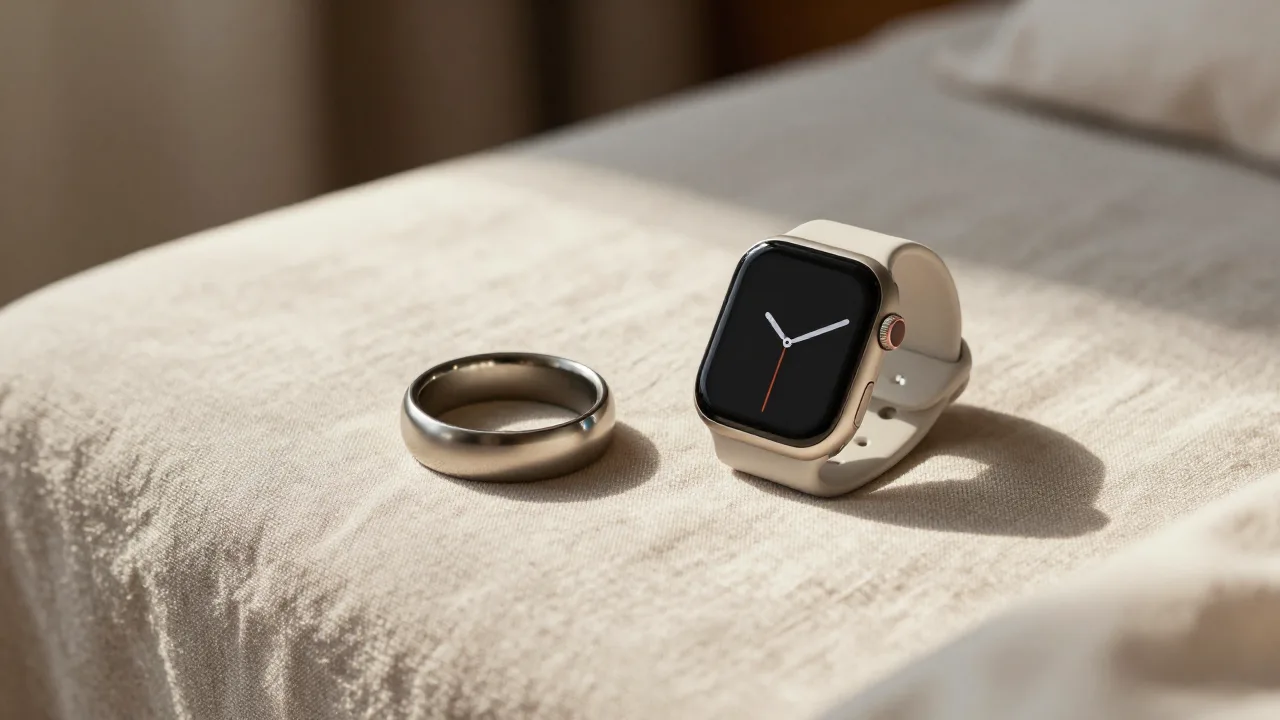
When comparing a smart ring vs. smartwatch for sleep tracking, smart rings typically win for overnight comfort, battery endurance, and signal consistency, while smartwatches excel as all-in-one daytime fitness and notification hubs. Because a ring sits snugly against the underside of your finger—where blood vessels are close to the skin surface—it captures steady heart rate and temperature trends without the bulk of a wrist strap.
Consumer sleep wearables have evolved rapidly, helping millions of everyday users understand how late meals, screen time, and stress affect their rest. Whether you are already practicing better evening wind-down routines—such as using the 3-3-3 rule for anxiety or box breathing vs. 4-7-8 breathing before bed—choosing the right tracker depends on what feels most natural to wear all night.
How Sleep Trackers Measure Your Rest
Neither smart rings nor smartwatches directly measure brain waves the way a clinical sleep lab (polysomnography) does. Instead, both wearables rely on a combination of tiny sensors to estimate when you fall asleep, wake up, and cycle through light, deep, and REM sleep:
- Photoplethysmography (PPG) Optical Sensors: Green, red, or infrared LEDs shine light into your skin to measure pulse rate, heart rate variability (HRV), and blood oxygen trends.
- 3-Axis Accelerometers: Motion sensors detect tiny tosses, turns, and stillness throughout the night.
- Skin Temperature Sensors: Thermistors track subtle overnight shifts in peripheral body temperature, which often reflect recovery, stress, or circadian rhythm patterns.
Smart Ring vs. Smartwatch: Side-by-Side Comparison
Comparing both form factors across everyday sleep and usability criteria highlights where each device shines:
| Feature | Smart Ring | Smartwatch |
|---|---|---|
| Overnight Comfort | High (lightweight, ~3–5 grams, no strap) | Moderate (bulkier case can press on wrist) |
| Sensor Placement | Underside of finger (dense capillary network) | Top of wrist (prone to shifting if loose) |
| Battery Life | 5 to 7 days per charge | 1 to 3 days (some sports models last longer) |
| Screen & Distractions | Screen-free (zero light or buzzing in bed) | Built-in screen (requires Do Not Disturb mode) |
| Daytime Fitness & GPS | Basic step and workout logging via phone app | Built-in GPS, live pace, calls, and apps |
| Subscription Fees | Many brands charge a monthly app membership | Most core sleep features are free after purchase |
Why Many Users Prefer Smart Rings for Sleep
For people whose primary goal is understanding sleep quality and daily recovery, smart rings solve several common complaints associated with sleeping in a watch:
1. Cleaner Optical Signals From the Finger
The arteries and capillaries along the palm side of your finger sit closer to the skin than the blood vessels on the top of your wrist, with less interference from hair, tattoos, or wrist bone movement. As a result, smart rings often maintain uninterrupted contact during sleep without needing to tighten a strap uncomfortably.
2. Zero Screen Glow or Nighttime Notifications
A smart ring has no display, speakers, or vibration motor. You never have to worry about a bright screen lighting up your bedroom when you roll over at 3:00 a.m. or a stray notification disrupting your rest.
3. Multi-Day Battery Life Makes Charging Effortless
Because smartwatches power bright touchscreens and radios, they often need daily charging—frequently right before bedtime, which leads to missed nights of data. Smart rings typically last 5 to 7 days, allowing you to top them up for 20 minutes while showering.
When a Smartwatch Is the Better Choice
Despite a ring’s overnight advantages, a smartwatch remains the more practical option for many active users:
- You Lift Weights or Play Grip Sports: Wearing a metal ring while lifting heavy dumbbells or barbells can scratch the ring or pinch your finger. Removing your ring during workouts means missing daytime activity data.
- You Want Live Workout Metrics: If you run, cycle, or follow structured routines like wall pilates for beginners, seeing real-time heart rate zones and timers directly on your wrist is far more convenient than checking a smartphone.
- You Prefer No Monthly Subscription: Several leading smart ring brands lock detailed sleep insights behind a recurring monthly subscription, whereas most major smartwatches include full sleep tracking out of the box.
How Accurate Are Consumer Sleep Trackers Really?
According to the Sleep Foundation, modern consumer wearables are reasonably accurate at detecting total sleep time (when you fall asleep versus when you wake up), often matching clinical equipment within 85% to 90% agreement.
However, both smart rings and smartwatches are less precise at distinguishing between specific sleep stages—especially light sleep versus REM sleep. As noted by the National Heart, Lung, and Blood Institute (NHLBI / NIH.gov), healthy sleep depends on consistent duration, regular bedtimes, and uninterrupted rest rather than chasing a “perfect” algorithmic sleep score every morning.
4 Tips to Get More Reliable Sleep Data From Either Device
- Check the Fit Before Bed: A smart ring should fit snugly at the base of your index, middle, or ring finger without spinning freely. A smartwatch should sit one finger-width above your wrist bone, snug enough that green sensor light does not leak out.
- Focus on Weekly Trends, Not Single Nights: One low readiness score after a salty dinner or late evening screen session is normal. Look at 7-day and 30-day averages to see how hydration, exercise, and bedtime consistency affect your rest.
- Keep Your Sleep Environment Cool and Dark: Wearables work best when paired with foundational sleep hygiene—such as limiting caffeine after noon and staying hydrated earlier in the day with electrolyte water vs. plain water so you do not wake up thirsty.
- Avoid “Orthosomnia” (Sleep Tracker Anxiety): If checking your sleep score first thing in the morning makes you feel stressed or tired even when you slept well, take a break from tracking for a few days and rely on how your body actually feels.
Frequently Asked Questions (FAQs)
Which finger is best for wearing a smart ring to track sleep?
Most manufacturers recommend the index, middle, or ring finger of your non-dominant hand, as these fingers offer strong blood flow and experience less wear and tear during daily tasks.
Can a smart ring or smartwatch diagnose sleep apnea?
No. While some newer wearables offer notifications for breathing disturbances or blood oxygen dips, they are wellness screening features—not medical diagnostic devices. If you snore loudly, gasp during sleep, or feel excessively sleepy during the day, consult a qualified physician for a clinical evaluation.
Do I need to wear my tracker all day for accurate sleep scores?
Wearing your device during the day helps establish your resting heart rate and activity baseline, which improves recovery estimates. However, wearing it solely at night still provides complete overnight sleep duration and heart rate trends.
Can you wear a smart ring and a smartwatch at the same time?
Yes. Many fitness enthusiasts wear a smartwatch during daytime workouts for GPS and timers, and wear a smart ring 24/7 for seamless overnight sleep and recovery tracking.
Sources & Official References
- National Heart, Lung, and Blood Institute (NHLBI / NIH.gov) – How Sleep Works and Healthy Sleep Habits.
- Sleep Foundation (SleepFoundation.org) – How Sleep Trackers Work and Accuracy Overview.
- U.S. Food and Drug Administration (FDA.gov) – General Wellness: Policy for Low Risk Devices.
About the Author: M. Rafey Aslam
M. Rafey Aslam is the founder and lead content researcher at HealthZaey, exploring consumer health technology, sleep science, and practical wellness habits.
Medical Disclaimer: This article is for general educational purposes only and is not a substitute for professional medical advice, diagnosis, or treatment. Consumer sleep trackers are not medical devices; consult a healthcare professional if you suspect a sleep disorder.