
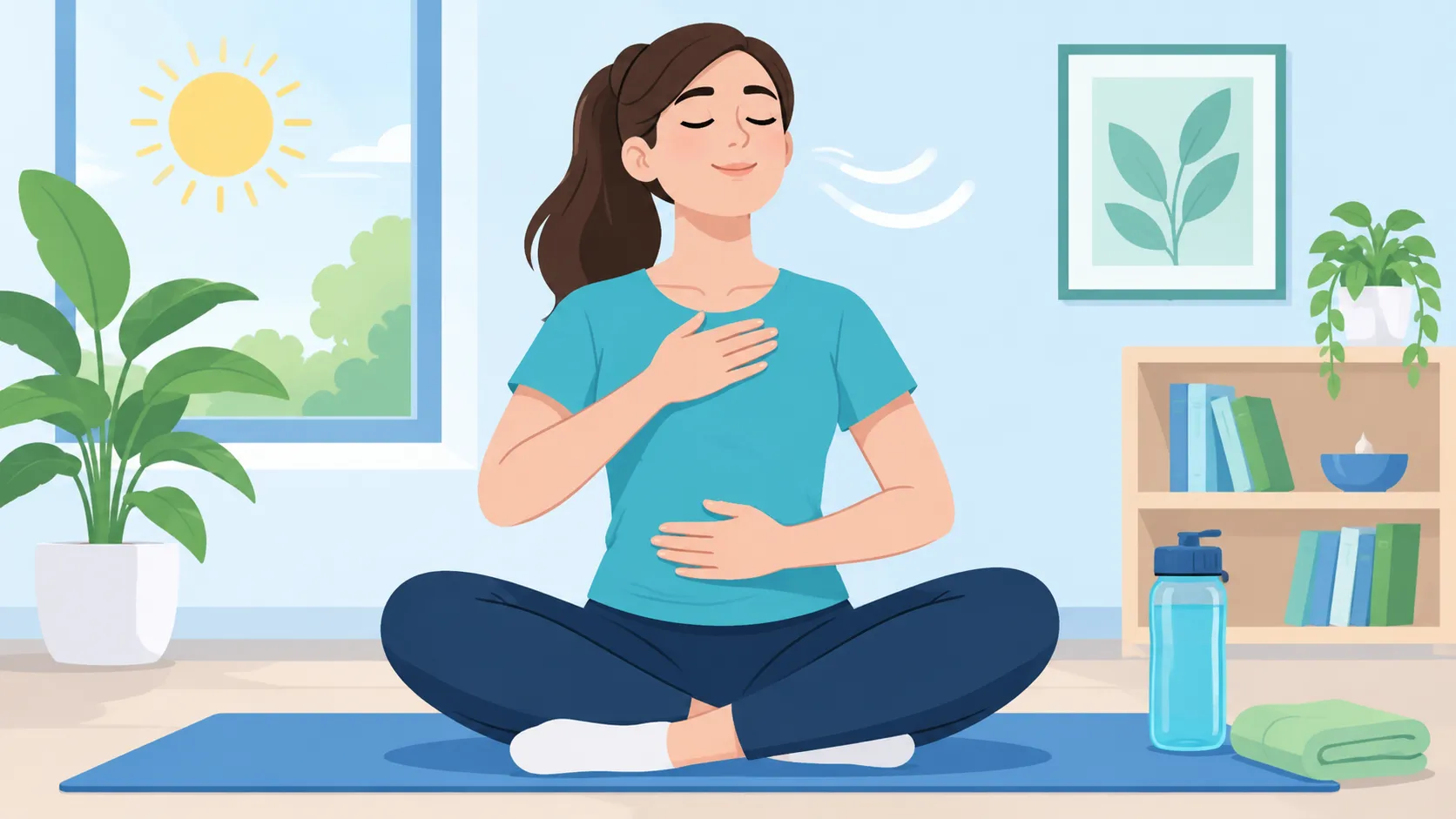
Key Takeaways:
- Box breathing (4-4-4-4) uses equal four-second intervals for inhaling, holding, exhaling, and pausing—making it ideal for daytime focus, workplace stress, and regaining mental composure.
- 4-7-8 breathing uses a longer eight-second exhale—making it more effective for rapidly slowing heart rate, easing physical tension, and winding down for sleep.
- Both techniques activate the body’s parasympathetic nervous system, and neither requires special equipment or prior meditation experience.
When stress or sudden anxiety strikes, controlled breathing is one of the fastest ways to calm your body’s stress response. Two of the most widely recommended methods are box breathing and 4-7-8 breathing. While both techniques rely on counted breath holds and slow exhalations, they affect your nervous system slightly differently depending on whether you need calm alertness or deep relaxation.
In this guide, you will learn how box breathing and 4-7-8 breathing work, which technique calms stress faster in different situations, step-by-step instructions for each, and important safety tips for beginners.
Box Breathing vs. 4-7-8 Breathing: Which One Calms Stress Faster?
For rapid physical relaxation and slowing a racing heart before sleep, 4-7-8 breathing generally feels calming faster because its extended eight-second exhale strongly stimulates the vagus nerve. However, for daytime stress, overwhelm, or mental focus without feeling drowsy, box breathing works better by creating steady, rhythmic balance.
Both techniques work by shifting your autonomic nervous system out of the “fight-or-flight” (sympathetic) state and into the “rest-and-digest” (parasympathetic) state. Choosing the right one comes down to your immediate goal—staying sharp under pressure or releasing tension to rest.
What Is Box Breathing (4-4-4-4 Method)?
Box breathing, also known as square breathing or four-square breathing, is a rhythmic breathing technique divided into four equal phases lasting four seconds each: inhale for 4 seconds, hold for 4 seconds, exhale for 4 seconds, and hold empty for 4 seconds.
Popularized in clinical stress management and high-pressure training environments, this balanced cadence prevents shallow hyperventilation and anchors racing thoughts. According to the Cleveland Clinic, intentional breath-holding and slow pacing help regulate oxygen and carbon dioxide levels while lowering cortisol-driven tension.
How to Practise Box Breathing (Step-by-Step)
- Sit upright: Rest your feet flat on the floor with your hands relaxed in your lap and shoulders dropped away from your ears.
- Inhale (4 seconds): Breathe in slowly and deeply through your nose for a steady count of 4, feeling your belly expand.
- Hold (4 seconds): Gently retain the air in your lungs for a count of 4 without clenching your throat or jaw.
- Exhale (4 seconds): Release the breath smoothly through your mouth or nose for a count of 4 until your lungs feel comfortably empty.
- Hold empty (4 seconds): Pause quietly for a count of 4 before beginning the next cycle.
Recommended duration: Repeat for 4 to 6 cycles (roughly 1 to 2 minutes) whenever you need to reset during a busy day.
What Is 4-7-8 Breathing?
4-7-8 breathing is a relaxation-focused breathing pattern popularized by integrative medicine physician Dr. Andrew Weil, based on traditional yogic pranayama practices. It follows a 1:1.75:2 ratio—inhaling for 4 seconds, holding for 7 seconds, and exhaling audibly for 8 seconds.
The defining feature of 4-7-8 breathing is that the exhalation is twice as long as the inhalation. Clinical research published through the National Library of Medicine (PubMed / NIH) shows that prolonged exhalations increase vagal tone and heart rate variability (HRV), signaling the brain to slow heart rate and lower blood pressure.
How to Practise 4-7-8 Breathing (Step-by-Step)
- Get comfortable: Sit with a straight back or lie down comfortably in bed. Rest the tip of your tongue lightly against the tissue ridge just behind your upper front teeth.
- Empty your lungs: Exhale completely through your mouth, making a soft whooshing sound.
- Inhale (4 seconds): Close your mouth and inhale quietly through your nose for a mental count of 4.
- Hold (7 seconds): Hold your breath gently for a count of 7.
- Exhale (8 seconds): Exhale completely through your mouth around your tongue with a steady whooshing sound for a count of 8.
Recommended duration: Start with 4 full cycles per session. Avoid exceeding 4 cycles during your first few weeks until your body adapts comfortably to the longer breath hold.
Box Breathing vs. 4-7-8 Breathing: Side-by-Side Comparison
| Feature | Box Breathing (4-4-4-4) | 4-7-8 Breathing |
|---|---|---|
| Breathing Pattern | 4s inhale – 4s hold – 4s exhale – 4s pause | 4s inhale – 7s hold – 8s exhale |
| Total Cycle Length | 16 seconds per round | 19 seconds per round |
| Primary Nervous System Effect | Balanced alertness and steady composure | Deep parasympathetic sedation and relaxation |
| Best Time to Use | Daytime, before meetings, exams, or tough conversations | Evening, before bedtime, or after acute emotional distress |
| Difficulty for Beginners | Easy (short, equal 4-second counts) | Moderate (7-second hold and 8-second exhale take practice) |
| Key Advantage | Calms nerves without making you sleepy | Quickly slows a racing pulse and eases physical restlessness |
When Should You Choose Box Breathing vs. 4-7-8 Breathing?
Choosing the right breathing pattern depends on what your body needs in that specific moment.
Choose Box Breathing When:
- You need calm focus under pressure: Ideal right before a job interview, presentation, medical appointment, or difficult conversation.
- You feel mentally scattered: Counting equal four-second intervals gives an anxious mind a simple structure to anchor onto.
- You are new to breathwork: Because the breath hold lasts only four seconds, beginners rarely feel air-hungry or lightheaded.
Choose 4-7-8 Breathing When:
- You are struggling to fall asleep: The extended eight-second exhale acts as a natural brake on a racing mind at bedtime.
- Your heart is pounding after a sudden stressor: Longer exhalations stimulate the vagus nerve more strongly, helping bring down physical agitation faster.
- You are winding down after work: Useful as an evening transition ritual when you want to release built-up muscle tension.
(Tip: Controlled breathing works even better when paired with other cognitive and grounding habits—explore our complete guide on How to Regulate Your Emotions: 7 Practical Skills to Try).
Safety Tips and Who Should Be Cautious
While breathing exercises are safe for most healthy adults, holding your breath is not suitable for every situation:
- Stop if you feel dizzy or lightheaded: Holding your breath for 7 seconds in 4-7-8 breathing can feel uncomfortable at first. If you feel short of breath, shorten the count (such as 3-4-5) or switch to gentle, unheld breathing recommended by the UK National Health Service (NHS).
- Respiratory or cardiovascular conditions: Individuals with severe asthma, COPD, uncontrolled high blood pressure, or heart rhythm conditions should consult a healthcare professional before practicing prolonged breath-holding techniques.
- Never practice while driving or swimming: Because deep relaxation techniques can cause temporary drowsiness or lightheadedness, only practice them while seated or lying down in a safe environment.
Frequently Asked Questions (FAQs)
Which is better for anxiety: box breathing or 4-7-8 breathing?
Both techniques effectively reduce anxiety symptoms, but they serve different moments. Box breathing is better for daytime anxiety when you need to stay alert and focused, while 4-7-8 breathing is more effective for evening anxiety, physical restlessness, and trouble sleeping.
How many rounds of 4-7-8 breathing should beginners do?
Beginners should start with 4 full cycles (lasting just over one minute) once or twice a day. Practicing too many rounds at once when starting out can cause mild lightheadedness.
Can you do box breathing lying down in bed?
Yes. While box breathing is commonly practiced sitting upright during the day, you can also use it lying flat in bed if you find the 7-second breath hold in 4-7-8 breathing too difficult.
How quickly do breathing exercises calm the nervous system?
Most people notice a measurable drop in physical tension and heart rate within 60 to 90 seconds (roughly 4 to 6 slow cycles) of paced breathing, though regular daily practice makes the calming response faster over time.
Sources & Official References
- Cleveland Clinic – Box Breathing Benefits and How to Do It – Clinical overview of 4-4-4-4 paced breathing and stress regulation.
- National Health Service (NHS.uk) – Breathing Exercises for Stress – Evidence-informed calming breath techniques for everyday stress.
- National Center for Biotechnology Information (PubMed / NIH) – Peer-reviewed research on slow-paced breathing, vagal tone, and heart rate variability.
About the Author: M. Rafey Aslam
M. Rafey Aslam is the founder and lead content researcher at HealthZaey. He focuses on breaking down mental wellness strategies, public health updates, and clinical research into clear, practical guides using data from official health agencies and peer-reviewed studies.
Medical Disclaimer: This article is for general educational purposes only and is not a substitute for professional medical advice, diagnosis, or treatment. Breathing exercises are self-help wellness tools, not clinical treatments for anxiety disorders or respiratory conditions. Always consult a qualified healthcare professional regarding persistent anxiety or breathing difficulties.